Preserving Our Culture
The Nulhegan Abenaki Tribe is serious about achieving economic self-sufficiency and stability for our people which means controlling our own destinies. With energy, determination, vision, and a commitment to the larger community, our sights are set upon utilizing our own resources and abilities to grow in the realm of economic development, more specifically, cottage industry and cultural tourism.
The revitalization, preservation, and protection of our cultural, historic, and physical values and resources is the foundation upon which we stand. Teaching our young ones the skills and customs of our ancestors keeps our heritage alive. We empower our children, not only to survive, but to thrive during economic hardships by utilizing the traditions and practices of our ancestors, such as organic agriculture and permaculture.
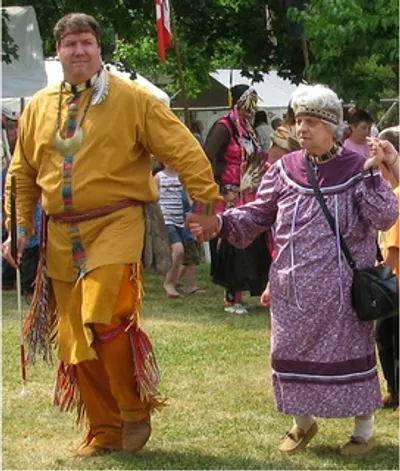
Table of Contents
- Abenaki Perspectives on Water: Lake Champlain Sea Grant
- Nulhegan Mound “Three Sisters” Gardening
- Abenaki Resources for Native American Heritage Month (PDF)
- Historical Timeline
- Culture & Traditions
Abenaki Perspectives on Water:
Lake Champlain Sea Grant
The Lake Champlain Sea Grant and the Vermont Department of Environmental Conservation hosted this Abenaki Water Perspectives panel discussion with speakers Chief Don Stevens, Melody Mackin and Rich Holschuh at the University of Vermont. Filmed on July 5, 2022.
Nulhegan Mound Gardening
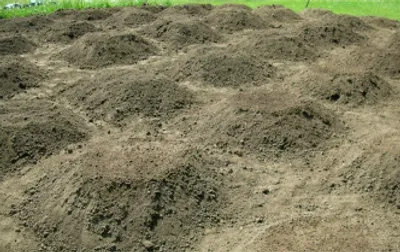
Nulhegan mound gardening has been passed down through generations and is alive and well. Often referred to as “Three Sisters” gardening: corn, squash, and beans are planted together and have complimented one another for centuries. Large amounts of healthy, organic food can be grown on even small parcels of land. Living sustainable lives and keeping our customs and traditions alive is the only way we know to ensure continuity.
Abenaki Resources for Native American Heritage Month
The Recommended Abenaki Resources for Native American Heritage Month was created by the Abenaki Trails Project team in collaboration with the Abenaki Arts and Education Center. © 2021 Please feel free to download and print this document.
The Abenaki Resources document has several lists of resources; many include links that will enable you to access the resources with ease. Following is a list of the included categories:
- Recognized Abenaki Tribal Websites
- Note: the website for the Koas tribe has been changed to koasek.org
- Partner Websites
- Children’s Literature
- Advanced Reading – 8th grade through adulthood
- Abenaki Language Resources
- Note: please add the following language website to your list:
- Abenaki Online https://abenakionline.com/
- Note: please add the following language website to your list:
- Papers, Booklets etc.
- Films and Videos
- Maps
- Thanksgiving
- Available Curriculum & Lesson Plans
- NOTE: A new curriculum is being developed at this time and should be ready for release before August 2025
Historical Timeline
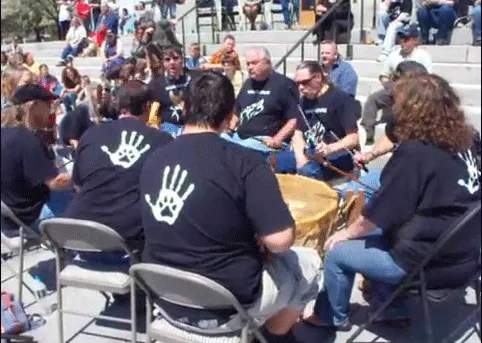
Early and modern historical references
1772-1775
Henry Tufts documents his life living among the Coosuck Abenaki. He lived among 2 family bands that ranged between Lake Memphremegog and Lake Umbagog with Old Philip, Mali Orcutt, Swasson, Susap and Tomhegan.
Winter 1783-1784
An Abenak named “Foosah” claims to have killed 27 moose and large #’s of beaver and otter at Barton Pond in VT
Winter 1779
Captain Susuap and a small band of Abenaki join settlers in Troy, VT and build their winter camp on the river. They sell baskets, birch bark cups & pails while there. Molly Orcutt was among them and doctored many of the settlers while living next to them.
Autumn 1788
Pierre Sales de La Terrière while traveling by the Abenaki on Lake Memphremagog on his way from Three Rivers to Harvard Medical School, notes in his memoirs “This road is so frequented by the savages, that, from distance to distance there are huts made that each one repairs and maintains in turn: they serve all people……The head of the family came from salmon fishing and moose hunting…..provided us with enough flesh and well-smoked fish for the rest of our trip.”
June 30, 1796
Coosuk Chief Philip sells over 3,000 square miles straddling the border to four men; Thomas Eames and 3 associates that called themselves the Eastern Company. The price was a simple promise to keep Philip and his two wives well fed and clothed for the rest of their lives and allow all other band members fishing and hunting rights on the land in perpetuity. This deed was signed by Phillip, Molly Mussell, and Mooselock Sullsop.
The 3,000 square miles included: from Umbagog and Mooselookmeguntic Lakes in the East (the headwaters of the Megalloway and Androscoggin Rivers; South to the junction of the Ammonoosuc with the Connecticut; West to the western shore of Lake Memphremagog up the Clyde and along the Nulhegan; and North to the junction of the Salmon and St Francis Rivers.
This land sale was actually illegal since the Federal Non-Intercourse Act of 1791 prohibited any agency other than the US government from buying Indian lands within the territory claimed by the United States (as about half of this parcel did.) Also in 1793 the Continental Congress wrote up a law forbidding private citizens to buy land from the Indians. The state of NH had a similar law on the books as early as 1719.
June 1812
A band of Abenaki is reported living at Owls Head Mountain on Lake Memphremagog in Potton, QC
1907
An Abenaki burial ground is dug up during the excavation for Barton Academy (now Barton Graded School). No record of what happened to those artifacts appears to exist.
August 15, 1957
John C. Huden, in his book “Indian Place Names in Vermont”, mentions a band of Abenaki called Nulheganocks living in the Nulhegan River Basin of the North East Kingdom of Vermont. Huden lists his informatants as Stephen Laurent, Amboise Obumsawin, Alice Masta Wawanolett and Oliver Wawanolett of Odanak, QC
June 25, 1978
The first record of a 20th century repatriation and reburial of Abenaki remains takes place in Center Harbor, NH. *From 1978 to the mid 1980’s there were in-depth discussions with Stephen Laurent, Homer St. Francis and Richard Phillips about the repatriation of Abenaki burials in NH.
November 15, 1980
The first record of a repatriation and reburial of Abenaki remains takes place in VT after a set of Abenaki remains is discovered at the Putney Historical Society in Putney, VT. Blackie Lampman and Richard Phillips ask Beverly Bolding of Goffstown, NH to facilitate the repatriation.
May 3rd, 2006
The Vermont Legislature recognized the Abenaki as a “Minority Population” within the State of Vermont under Statute 853. This entitled the Abenaki protections as a disadvantaged race of people. However, since there were no recognized Abenaki Indian Tribes in Vermont, there were “legally” no Abenaki people under the law. This was an attempt to recognize our people without recognizing tribes which of course we would not accept.
March 16, 2008
The Vermont Indigenous Alliance is formed by Elnu Tribe, Koasek Tribe, Missiqoui Tribe and Nulhegan Tribe of Abenaki with the purpose of unifying the tribes and pursuing official state recognition from the state of Vermont.
April 22, 2011
Nulhegan was officially recognized by the State of Vermont as an Abenaki Indian Tribe and accepted our territorial boundaries contained within our petitions.
December 12, 2012
The Nulhegan Abenaki Tribe officially takes ownership of the first tribal forestland in 200 years with the purchase of a 65-acre parcel in Barton, VT.
January 1, 2013
Wabanaagig TV from the Aboriginal Peoples Television Network in Canada produces the movie “The Vermont Abenaki – A struggle for recognition” which documents the struggle for Vermont State recognition and culminates with the celebration of recognition at the first annual Nulheganaki.
August 19-22, 2015
The annual Wabanaki Confederacy Conference was held in Shelburne, VT. This was the first time the Confederacy was hosted by the Western Abenaki of Vermont in 200 hundred years. The Seven Nations of Canada Confederacy Nations also attended this important gathering. The Abenaki are the only Nation who is in both Confederacies.
December 20, 2016
Chief Don Stevens and the Nulhegan Abenaki tribe reach a settlement agreement with the US Dept. of the Interior granting the Nulhegan Tribe, Elnu Tribe and Koasek Tribe the legal right to possess, carry, use, wear, give, loan or exchange among other Indians without compensation, all federally protected birds as well as their parts or feathers. November 8th, 2018 Chief Stevens was able to add the Missisiquoi Tribe to the settlement agreement.
November 9, 2019
Through the efforts of Nulhegan Abenaki Chief Don Stevens the grand opening of the Abenaki Nation Cultural and Historical Exhibit occurs at the Burlington International Airport.
References
1. Tufts, Henry. The Autobiography of a Criminal; Loompanics Unlimited, 1993. ISBN 1-55950-095-6
2. Gazetteer of Lamoille and Orleans Counties, VT.; 1883-1884, Compiled and Published by Hamilton Child; May 1887
3. Samuel Sumner’s 1860 History of Missisco Valley (Vermont)
4. Pierre De Sales Laterriere. Memoirs of Pierre De Sales Laterriere. 1873
5. Colin G. Calloway. The Western Abenakis of Vermont, 1600-1800, University of Oklahoma Press1994
6. Crystal Lake Falls Historical Association (June 6, 2007). Barton Academy turns 100 years old. The Chronicle.
7. Vermont Archaeological Society. An Overview of Abenaki and Indigenous Peoples, Burial/Site Protection, Repatriation, and Customs of Respect, Looting, and Site Destruction in the Abenaki Homeland, and Relations between Archeology, Ethnohistory, and Traditional Knowledge. The Journal of Vermont Archaeology, Volume 12, 2011.
8. Vermont Statutes. Justia US Law. https://legislature.vermont.gov/statutes/section/01/023/00853
9. Fred Wiseman. Against the Darkness: The American Abenaki Experience. Distributed by Title VII Indian Education Program. 2006
10. “An Act Relating to Recognition of the Nulhegan Band of the Coosuk Abenaki Nation as a Native American Indian Tribe”. Vermont General Assembly.
11. Vtdigger.org. Nulhegan Abenaki attain first tribal forestland in more than 200 years. December 17, 2012. https://vtdigger.org/2012/12/18/nulhegan-abenaki-attain-first-tribal-forestland-in-more-than-200-years/
12. Aboriginal Peoples Television Network. Wabanaagig, Land of the Rising Sun. The Vermont Abenaki – A struggle for Recognition. January 1, 2013. https://www.cctv.org/watch-tv/programs/vermont-abenaki-struggle-recognition?fbclid=IwAR0tAnselSsPql96gSeqvSfv0AtzlhZ1BSwA_BW_jaM_lMO6TKsSLU1BL1s
13. Burlington Free Press. Abenaki host historic gathering in Shelburne. August 22, 2015. https://www.burlingtonfreepress.com/story/news/local/2015/08/22/abenaki-wabanaki-shelburne-farms/32205229/
14. US Fish and Wildlife Service, Interior. Morton Policy: Bald and Golden Eagle Protection Act and Migratory Bird Treaty Act; Religious Use of Feathers – Settlement Agreement with Nulhegan Abenaki Tribe. December 21, 2016.
15. WCAX.com. Abenaki Tribe displays history at Burlington airport. October 15, 2019. https://www.wcax.com/content/news/Abenaki-tribe-displays-history-at-BTV-airport-563110421.html
16. Nulhegan Abenaki Tribe Website. https://abenakitribe.org/
Culture and Traditions
- Government – According to its constitution, the Nulhegan tribal government is organized into three branches: the Chief (executive), the Tribal Council (legislative), and Council of Elders (judicial). The Tribal Headquarters are at 1366 May Farm Road, Barton, VT 05822 You may click on the word “Government” at the beginning of this section to see more about our government.
- The Nulhegan Gathering is a celebration held annually since State Recognition in 2011 at the end of August in the Northeast Kingdom of Vermont. It is important in bringing together members of families, many from great distances for a weekend long celebration of Abenaki culture.
- Snow Snake Games are ancient games that the Abenaki have played for centuries. Brian Chenevert and Roger Longtoe Sheehan revived the snow snake games among the Abenaki in 2008 and they have been played annually ever since. Click on the words “Snow Snake Games” at the beginning of this section. You will be brought to the Activities page where you can scroll down and see pictures of some of our games that have been held in the past. Watch our Events calendar during the winter months to find out when and where our next games will be held.